
PROJECT OVERVIEW
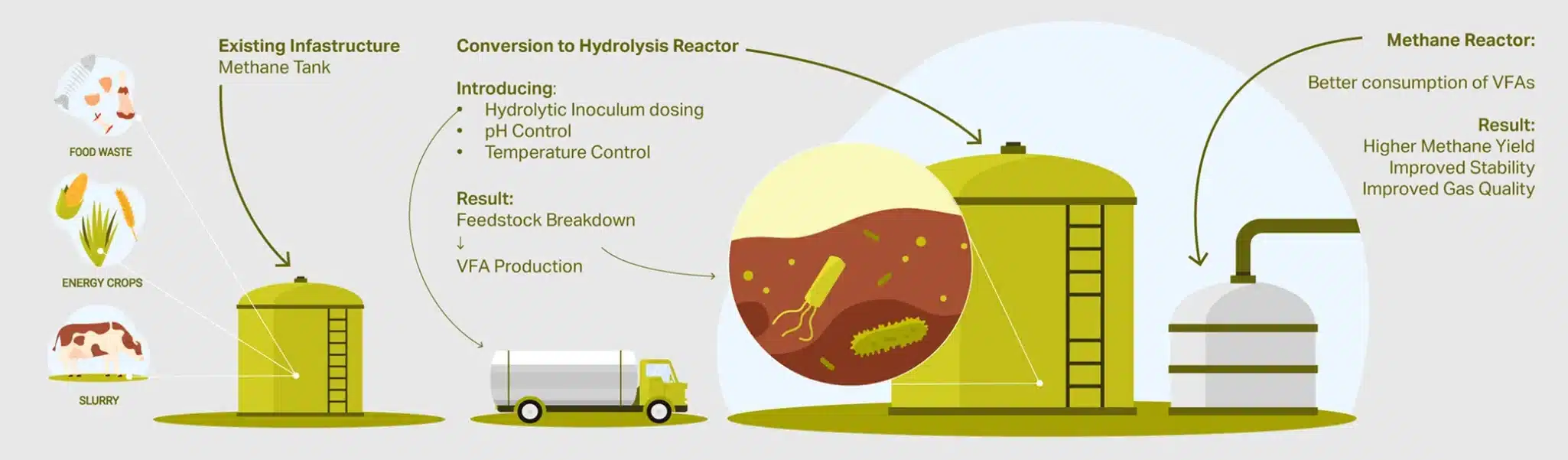
Clinty Bio delivered an industrial‑scale retrofit by converting an existing methane‑producing tank into a dedicated hydrolysis reactor as part of a dual‑stage digestion strategy. The project combined tank conversion, enhanced process control including controlled pH and hydrolytic inoculum dosing to improve gas quality, increase process stability, and maximise downstream methane production.
By optimising existing infrastructure rather than expanding capacity, the solution delivered measurable performance improvements, reduced feedstock demand, and long‑term operational efficiency within the existing plant footprint.
Project Information:
Industry: Anaerobic Digestion & Renewable Energy
Project Focus: Dual-Stage Digestion Optimisation
Objectives:
- Improve methane yield
- Increase loading capacity
- Enhance stability
- Improve gas quality
- Reduce feedstock demand
Approach: Laboratory Analysis, Pilot Testing & Biological Optimisation
The Challenge
The existing single‑stage digestion system faced several limitations:
- Inefficient feedstock utilisation, requiring higher feed input to maintain methane output
- Variability in methane quality and volume
- Process instability impacts caused by hydrogen sulphide (H₂S) levels
- Limited flexibility for future capacity increases
The client required a solution that would improve performance while minimising expenditure and operational disruption.
Assessment & Validation
Before implementing optimisation strategies, Clinty Bio carried out controlled testing and biological evaluation to assess performance across multiple digestion configurations.
This enabled the team to compare methane production, feedstock utilisation and overall biological stability under different operating conditions.
The Solution
The methane tank was converted into a dedicated hydrolysis reactor with controlled pH and temperature to drive improved hydrolysis performance.
Hydrolytic inoculum was manufactured and dosed to boost volatile fatty acid (VFA) production, while tank conditions were optimised to stabilise upstream digestion.
Collectively, these measures enabled a reliable two‑step digestion process with improved process control and consistent gas quality.
Results & Outcomes
Measurable Improvements
Testing demonstrated measurable improvements across biological stability, methane production and overall process efficiency.
30% reduction in feedstock required for the same methane (CH₄) output
Methane concentration increased from 53% to 60%
Engines maintained 100% utilisation post‑conversion
Significant increase in VFA production following inoculum addition
H₂S levels reduced < 50 ppm, improving gas quality & equipment protection
Increased methane stability and improved operational reliability
Additional benefits
Potential to double output by adding engine capacity
Higher organic loading rate (OLR) capability
Improved gas quality and reduced downstream treatment requirements
Potential to double output by adding engine capacity
Performance Data
What the Data Suggests
Performance data demonstrated clear improvements in methane production efficiency and plant utilisation following implementation of the dual-stage approach.
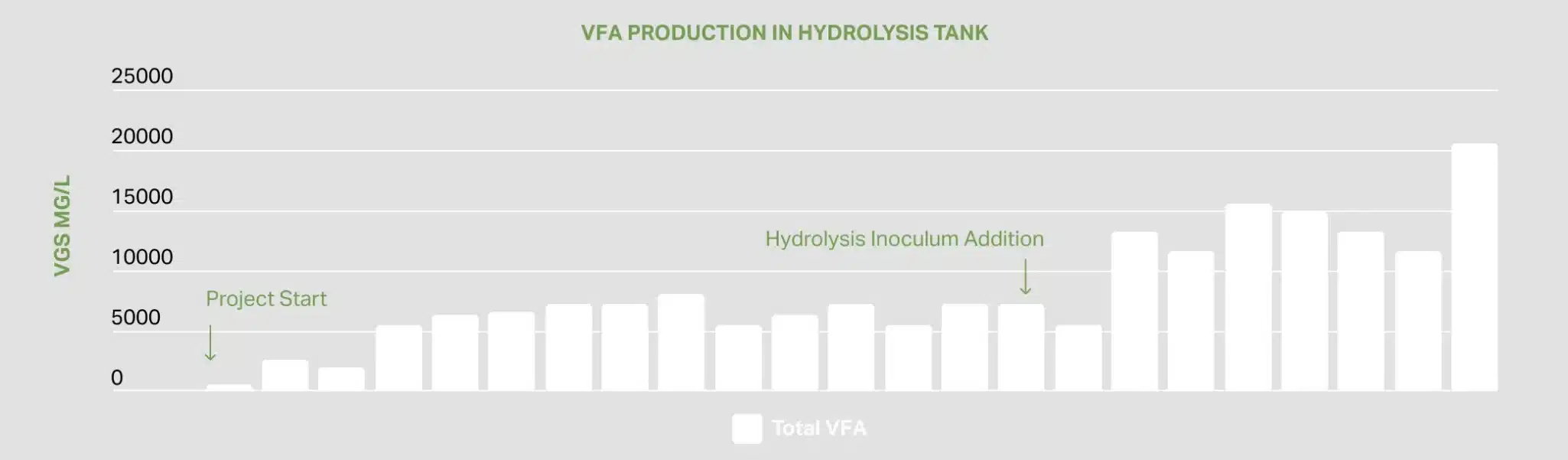
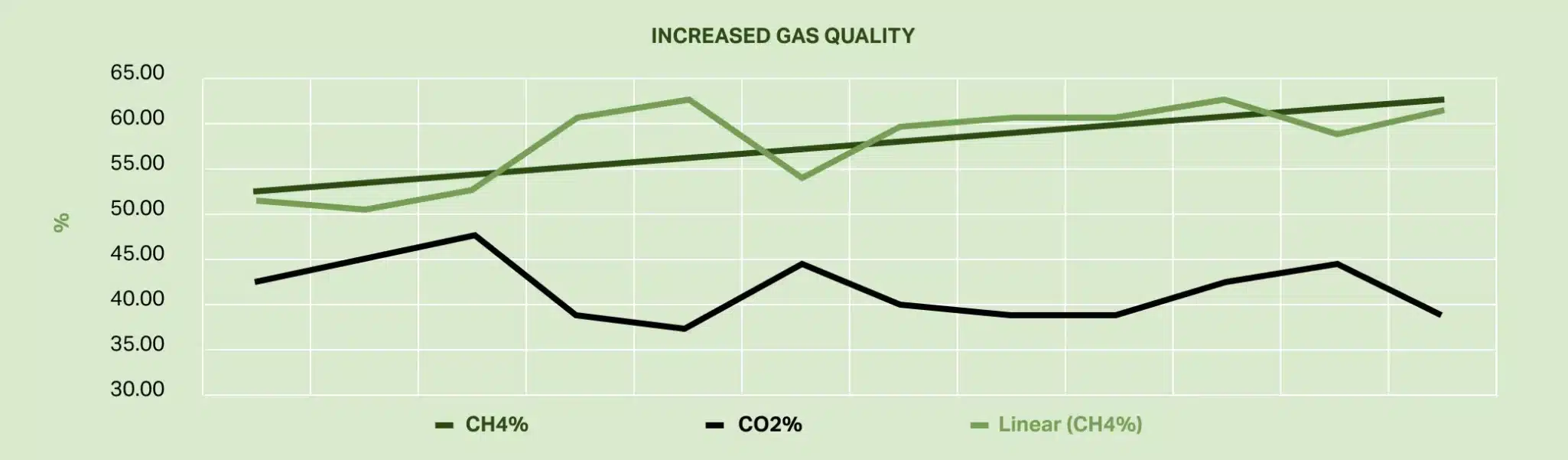
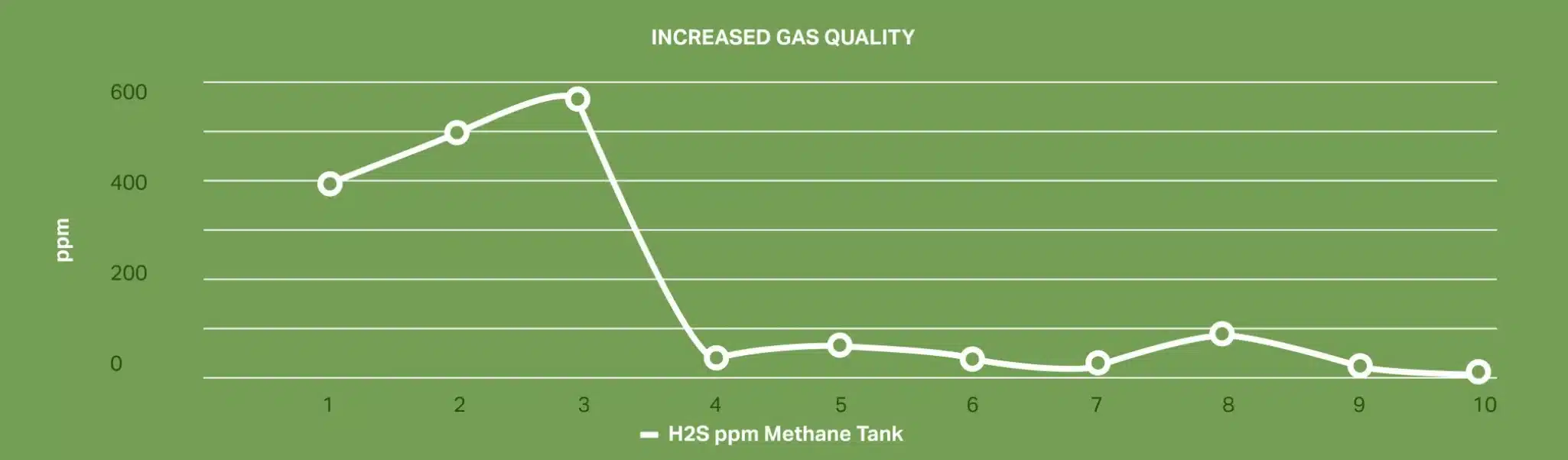
The data demonstrated improvements in both methane yield and utilisation of available tank capacity, supporting the effectiveness of biological stage separation as an optimisation strategy.