Project Overview
Clinty Bio examined a hydrolysis tank trial designed to improve the processing of agricultural waste. The focus was on using dual-stage digestion system to increase the loading rate while maintaining biogas yield. Exploring how this method can improve efficiency in Anaerobic Digestion (AD) systems.
Project Information
Industry: Anaerobic Digestion & Renewable Energy
Project Focus: Increase the organic load rate (OLR)
Objectives:
- Increase Load Rate
- Maximise Stable Operation
- Enhance stability
- Consistent biogas production
Approach: Laboratory Analysis, Pilot Testing & Biological Optimisation
The Challenge
The client had excess Combined Heat and Power (CHP) capacity that could not be fully utilised due to limitations in the existing tank single-stage AD system. Increasing the organic loading rate (OLR) this capacity risked reducing efficiency, lowering biogas yield, and causing system instability. The challenge was to increase the loading rates while maximising stable operation and consistent biogas production within the existing infrastructure.
Assessment & Validation
Before implementing optimisation strategies, Clinty Bio carried out controlled testing and biological evaluation to assess performance across multiple digestion configurations.
This enabled the team to compare methane production, feedstock utilisation and overall biological stability under different operating conditions.
The Solution
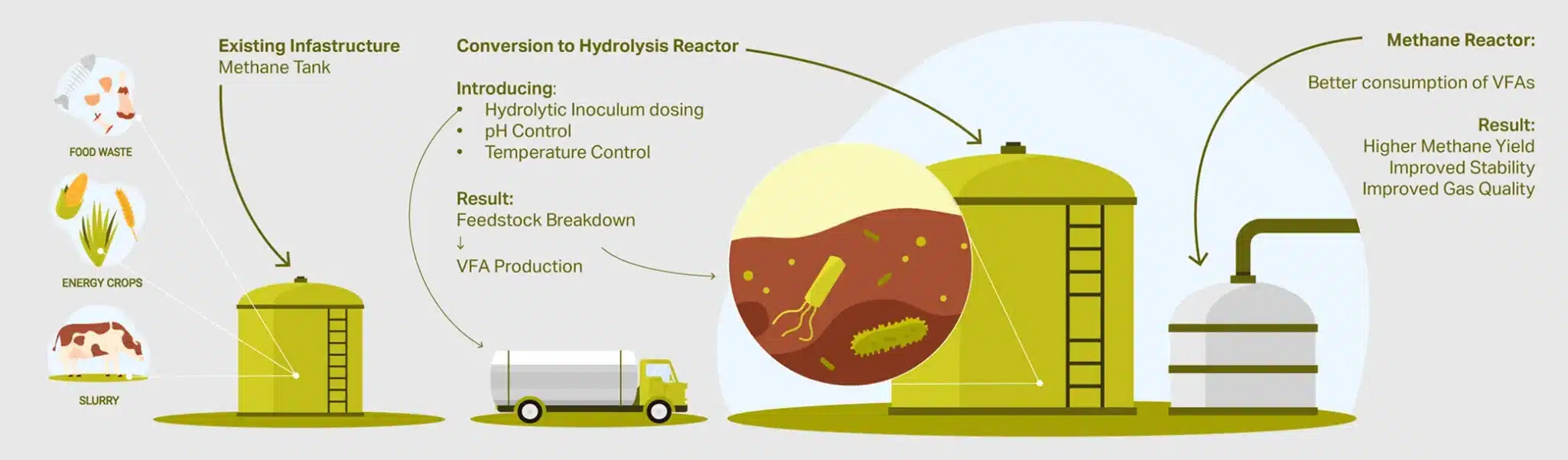
To address this, Clinty Bio assessed a dual-stage digestion configuration incorporating a hydrolysis stage and cavitation to improve waste breakdown before the main digestion process. Parallel 60 L reactor lanes were operated to directly compare single-stage and dual-stage performance under increased loading rates. This approach aimed to enable higher organic loading rates, improve digestion efficiency, and maximise utilisation of the client’s existing CHP capacity without requiring major infrastructure changes.
Results & Outcomes
Measurable Improvements
The trial showed that the use of a hydrolysis tank in a dual-stage digestion system was effective in improving overall performance.
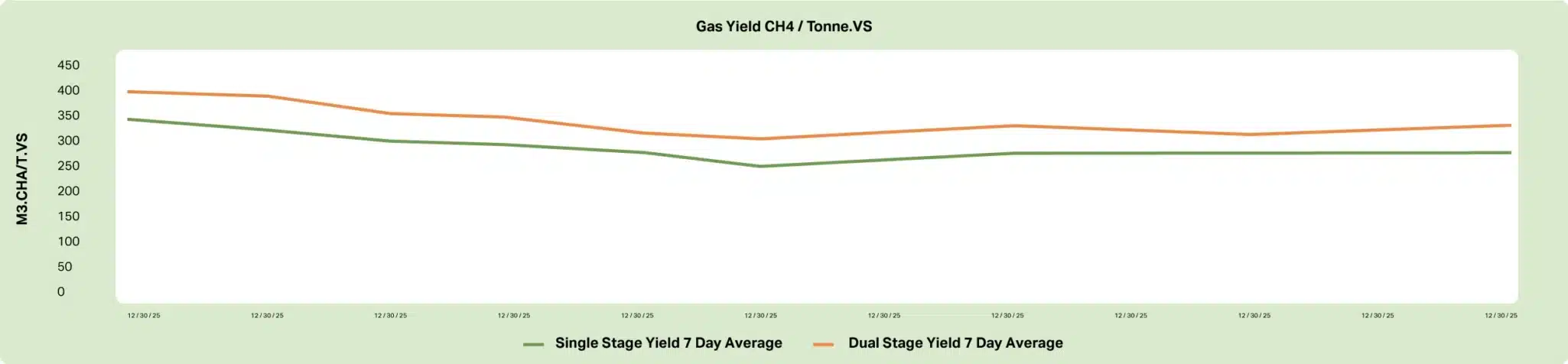
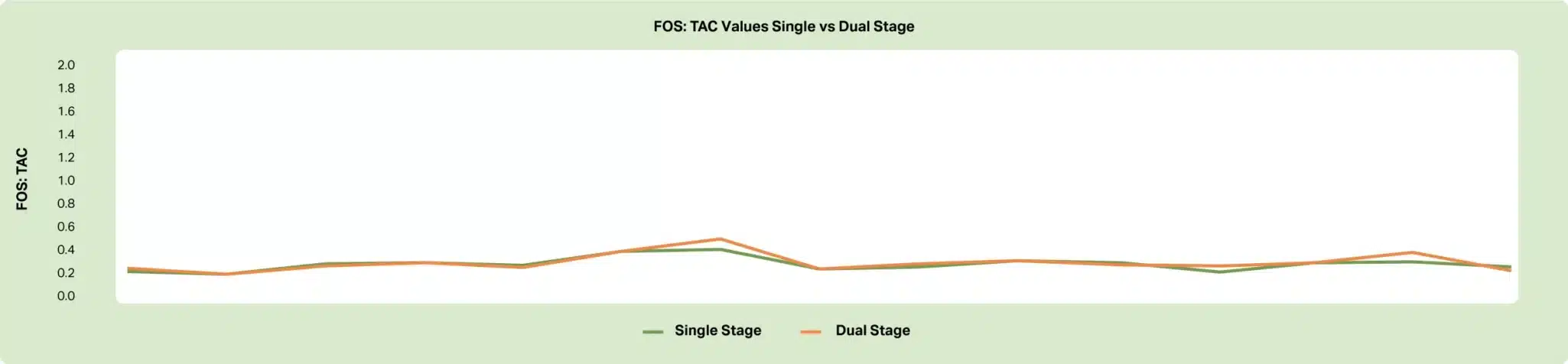
Higher loading rates of agricultural waste were successfully achieved without negatively affecting the process. The hydrolysis stage helped improve the breakdown of organic material, allowing the system to operate more efficiently. Despite the increase in input, biogas yield was maintained, demonstrating that the system remained stable.
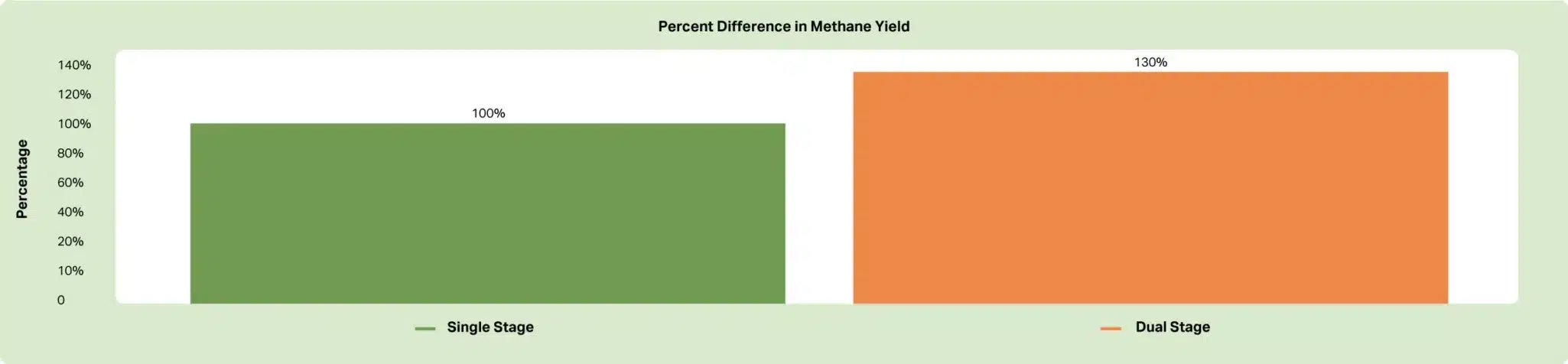
Overall, the dual-stage process performed better than a traditional single-stage digestion system, although it introduced some additional complexity and potential cost.
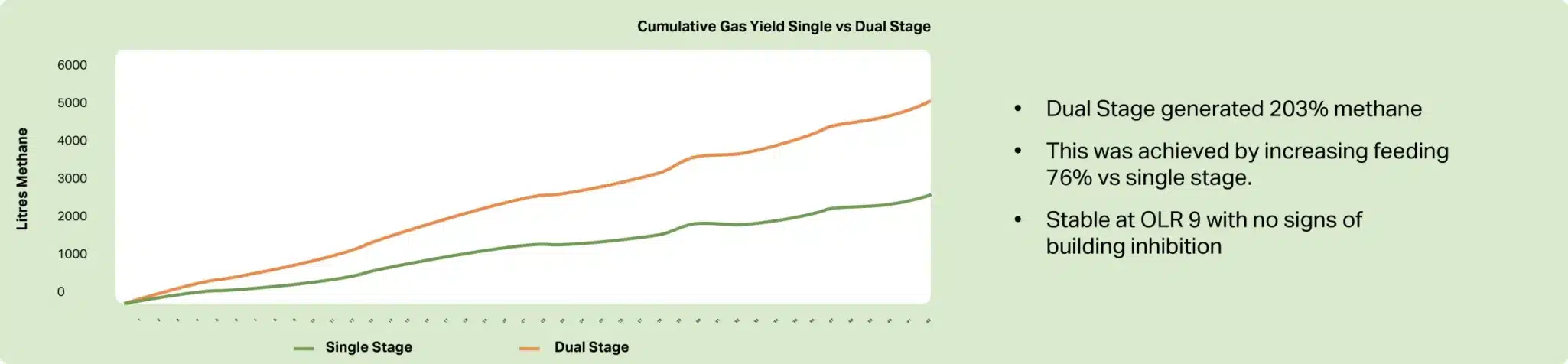
Dual Stage generated 203% methane
This was achieved by increasing feeding 76% vs. single stage
Stable at OLR 9 with no signs of building inhibition
Additional Benefits
Higher Methane Yield: Faster, more complete VS → CH₄ conversion
Greater Stability: Resilient to VFA build-up and process upsets
Higher OLR Capacity: Processes more feedstock per m³
Improved Gas Quality: Higher CH₄ %, lower H₂S, consistent output
Operational Savings: Lower heating, feedstock use, and mixer stress
Scalable & Retrofit-Friendly: Low-CAPEX upgrades for existing plants
Performance Data
What the Data Suggests