
Project Overview
This project focused on the recovery and optimisation of an anaerobic digestion (AD) plant following an extended period of acidic conditions and biological imbalance. Performance at the site had declined, with reduced energy output and instability within the digestion process due to disrupted microbial function and suboptimal operating conditions.
A structured, data-led strategy was implemented to diagnose the underlying causes and apply a targeted recovery programme. By correcting pH levels, reducing volatile fatty acid accumulation, and supporting microbial restoration, the objective was to re-establish efficient operating conditions and strengthen long-term system resilience.
The result was a return to consistent digester performance creating a more stable and sustainable platform for future optimisation.
Project Information
Industry: Anaerobic Digestion / Renewable Energy
Project Focus: Process stabilisation and recovery following severe acidification
Objectives:
- Rebalance pH and re-establish stable biological conditions within the digester
- Restore microbial populations, particularly methane-producing organisms
- Lower volatile fatty acid levels and improve process efficiency
- Strengthen tolerance to feedstock variation and operational stress
- Reduce dependency on corrective inputs and lower ongoing costs
Approach: Process monitoring, targeted nutrient and buffering inputs, and a phased recovery programme designed to stabilise biological activity and optimise digestion performance

The Challenge
The AD plant had been experiencing operational instability for more than four months as acidic conditions disrupted the balance between key microbial populations responsible for digestion. Elevated volatile fatty acid (VFA) levels, declining gas production and reduced methane quality all pointed towards increasing biological stress and deteriorating performance.
Without intervention, the ongoing acidification risked further reductions in output, increased operating costs and potential process failure.
Assessment & Validation
Clinty Bio carried out a detailed review of process data, including pH, VFAs, alkalinity and gas composition, alongside historical operational records. This analysis identified advanced acidification within the digester and confirmed that acid-forming bacteria were outcompeting methane-producing microorganisms.
Independent laboratory testing validated the findings, providing a clear diagnosis of the biological imbalance responsible for reduced digestion efficiency and energy production.
The Solution
A structured recovery programme was implemented to restore biological balance and support methane-producing populations. The strategy focused on gradually increasing alkalinity, introducing targeted nutrient supplementation and closely monitoring key process parameters to encourage stable microbial recovery.
Continuous analysis and controlled operational adjustments allowed performance to improve steadily, helping restore efficient methane production while supporting long-term process stability.
Results & Outcomes
Measurable Improvements
The following outcomes highlight the measurable results recorded during the assessment, recovery and optimisation process.
Stable operating conditions successfully restored, with balanced biological activity
pH increased from below 6.5 to an optimal range of 7 – 8
Significant reduction in VFA concentrations to within acceptable limits
Noticeable improvements within 2–4 weeks, with full recovery achieved in 6–12 weeks
Greater consistency in system performance with fewer fluctuations
Reduced need for reactive chemical interventions
Lower ongoing operational and maintenance costs
Enhanced long-term reliability and reduced risk of recurrence
Additional Benefits
Increased operator confidence through clearer process control and monitoring
Reduced likelihood of downtime and unplanned system interruptions
Extended lifespan of plant equipment due to reduced stress on the system
Stronger financial returns through more consistent energy generation
Lower environmental impact through improved process efficiency
Solid foundation for future system optimisation and capacity expansion
Performance Data
What the Data Suggests
Performance data and process monitoring provide further insight into the outcomes observed throughout the recovery programme.
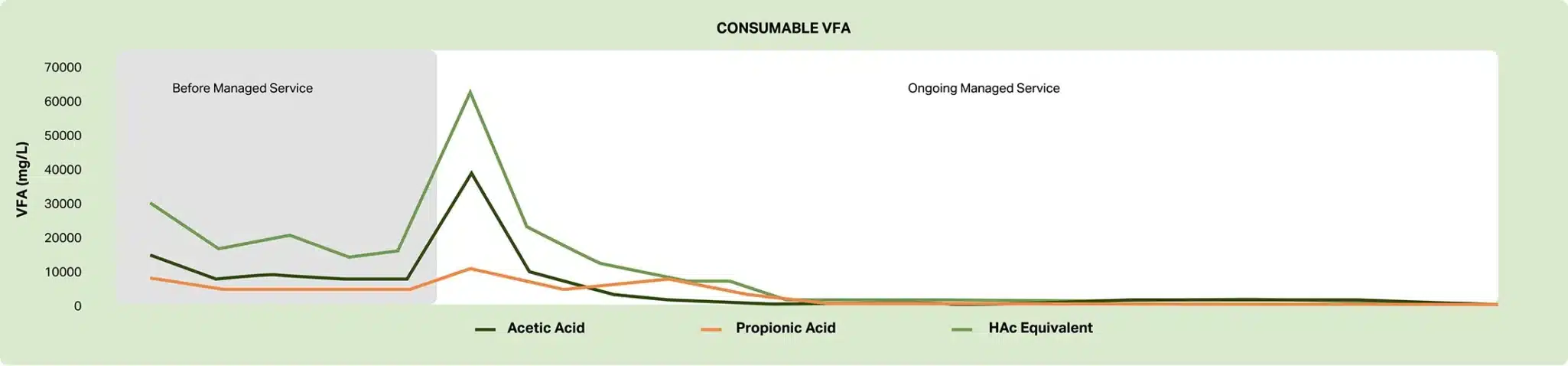
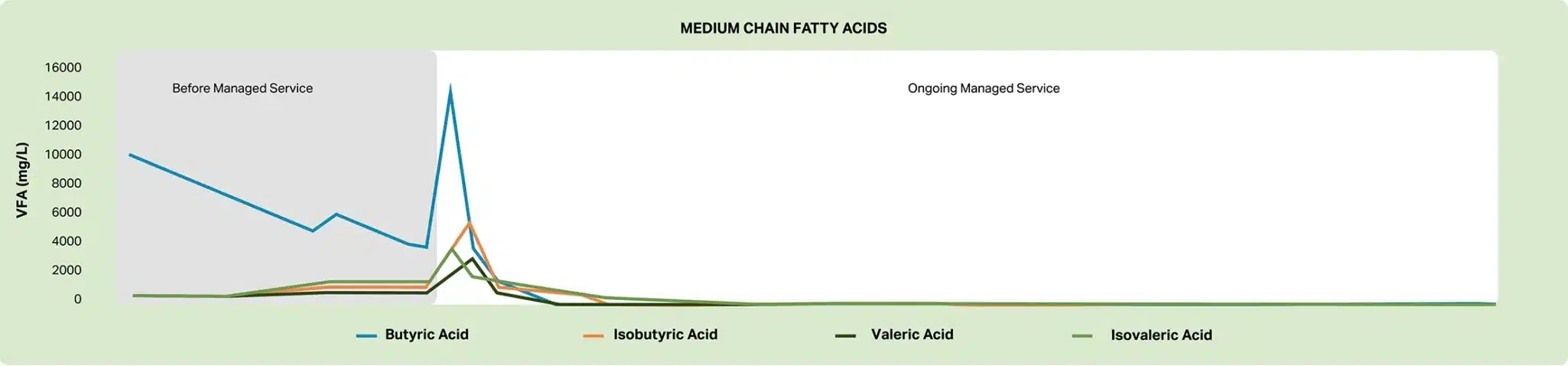
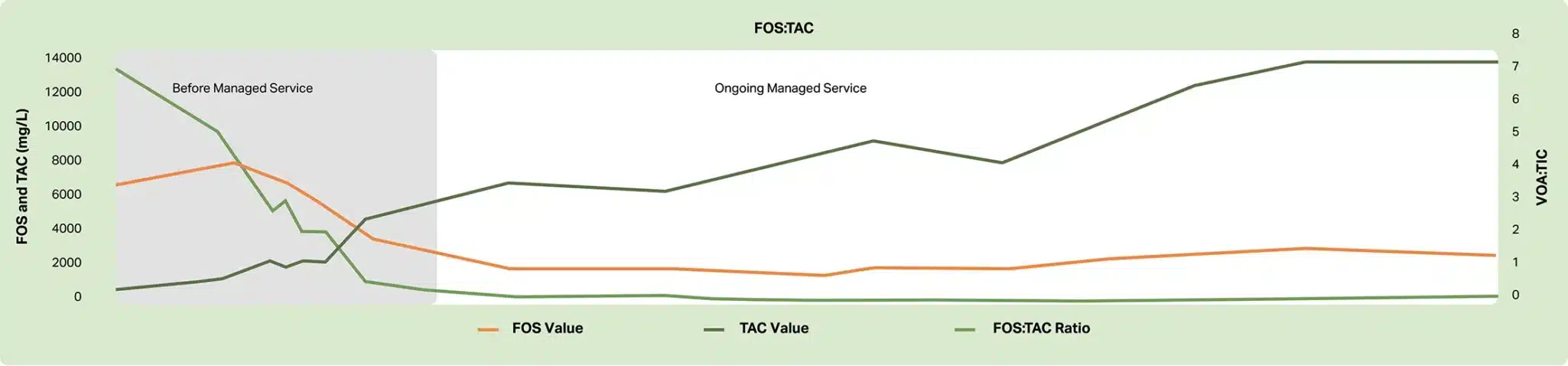
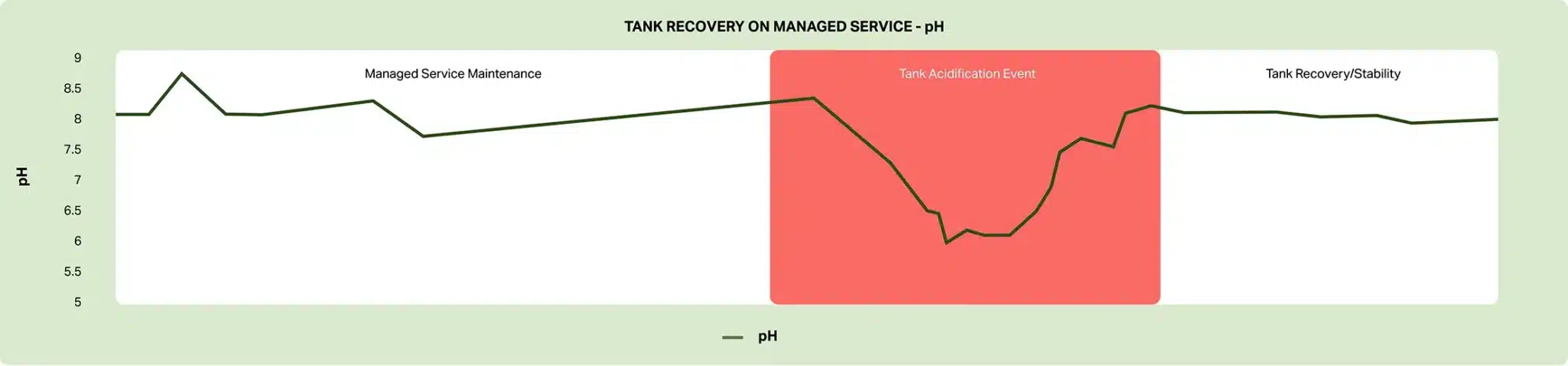
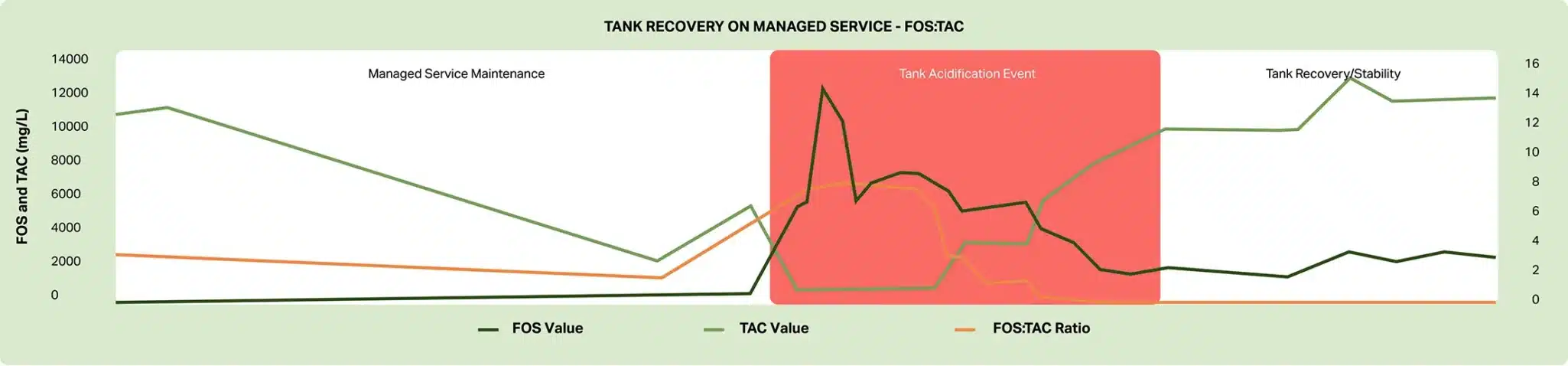
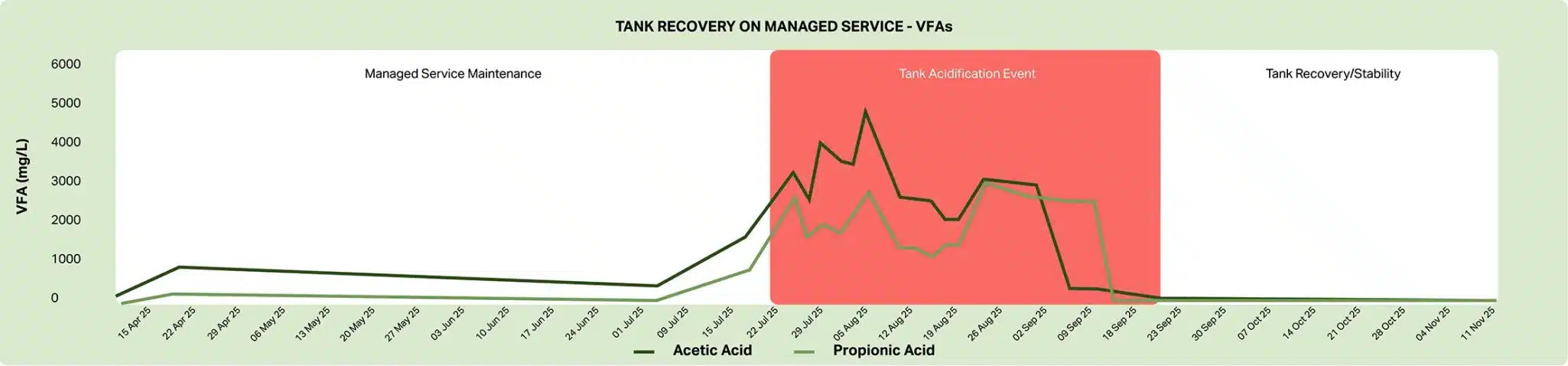
The data demonstrated improvements in both methane yield and utilisation of available tank capacity, supporting the effectiveness of biological stage separation as an optimisation strategy.