


Prime Minister's energy plan ignores the cheapest fix on the table 29 September 2026 –…
Tried and tested process is also the cheapest way of removing greenhouse gases – says new ADBA report
Tried and tested process is also the cheapest way of removing greenhouse gases – says new ADBA report
Removing global warming gases from the atmosphere can be achieved at less than half the cost of current UK government plans, a report shows. Its conclusion could be crucial to getting global emissions back on track.
The process of removing the global warming gas carbon dioxide from the atmosphere can be achieved at a quarter to a half of the cost of rival technologies by a tried and tested process of creating biomethane from organic matter.
The report comes soon after the independent Greenhouse Gas Removals (GGRs) Review by Lord Whitehead, and demonstrates that the biogas to biomethane upgrading process delivers the cheapest and most effective way of removing carbon and sustaining industrial jobs.
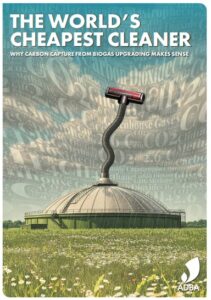 The report, published by green gas trade body the Anaerobic Digestion and Bioresources Association (ADBA) shows that carbon capture from biogas upgrading is already happening at a fraction of the cost of alternatives put forward by the UK government.
“This is a tried and tested process of carbon removal that needs no more laboratory or development work. The biogas to biomethane process is renewable, reliable and ready” said Chris Huhne, chairman of ADBA.
“Gas has for far too long been seen only as a cause of climate change. However, green gas is not part of the problem but a critical part of the solution, offering real hope of meeting ambitious climate goals at low cost”.
The report will be presented at the forthcoming ADBA National Conference 2025 in London on Wednesday 10 December.
-ENDS-
For further information, contact:
Jocelyne Bia, Head of Corporate Communications and PR
e: Jocelyne.bia@adbioresources.org; tel: 020 3176 0592
Notes to editors
- The Anaerobic Digestion and Bioresources Association (ADBA) is the trade association for the UK anaerobic digestion (AD) and biogas industry. ADBA’s vision is to see the full potential of the UK AD industry realised so it can help the UK achieve its emissions targets and other policy goals, creating a truly circular economy. www.adbioresources.org
- About the AD industry
- There are currently over 750 AD plants operational in the UK
- The entire industry digests approximately 36 million tonnes of organic material each year – organic material that would otherwise emit greenhouse gases including highly potent methane, if left untreated in landfill.
- An estimated 21 TWh of biogas is produced each year by the AD industry – this green gas is either used to generate electricity and heat via a combined heat and power (CHP) unit or upgraded to biomethane and injected directly into the national gas grid.
- The industry currently delivers savings of 1% off the UK’s greenhouse gas emissions every year.
- An estimated 4,800 people are currently employed in the AD and biogas industry in the UK.
- Overall, the industry grew by 5 per cent last year as the closure of older, smaller plants was outweighed by big-scale units feeding into the gas grid.
- Fully deployed, by 2050, the UK AD and biogas industry is expected to:
- produce over 100TWh of biomethane.
- provide between 20% and 50% of UK gas demand.
- create 30,000 direct and 30,000 indirect jobs.
- save the UK 27 million tonnes of CO2 equivalent = taking 1/3rd of all cars off the road.
- heat 6.8 million UK homes with the 8 billion m3 of biomethane generated.
- How AD works
Anaerobic digestion (AD) is the natural breakdown of organic matter when deprived of oxygen in a container called digester. The process produces biogas and a residue called digestate – a stable, nutrient-rich substance used as a biofertiliser which restores soil health.
