
MEMBER PRESS RELEASE - Pump success move as Börger UK continues to grow Börger UK,…
ADBA welcomes Energy Minister’s Announcement of Green Gas Support Scheme extension plans as a significant vote of confidence for the biomethane industry
ADBA welcomes Energy Minister’s Announcement of Green Gas Support Scheme extension plans as a significant vote of confidence for the biomethane industry
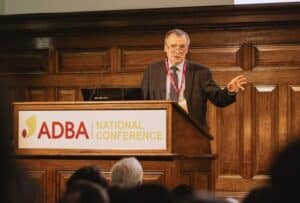
- Lord Whitehead, Minister of State for the Department of Energy Security and Net Zero (DESNZ), made the announcement at the ADBA National Conference in London today.
- The Green Gas Support Scheme (GGSS) would be extended for two years.
The Anaerobic Digestion and Bioresources Association (ADBA) welcomes today’s UK Government announcement of their plans to extend the Green Gas Support Scheme (GGSS) by two years to 31 March 2030. The news was officially delivered by Lord Alan Whitehead, Minister of State for DESNZ, as he addressed the ADBA National Conference in Westminster this morning.
The extension of the GGSS provides essential policy stability for the UK’s rapidly growing biomethane sector, safeguarding investment and ensuring the continued development of new and existing anaerobic digestion (AD) projects. At a time when the UK must accelerate progress towards its net zero targets, strengthen energy resilience and reduce dependence on fossil gas imports, today’s commitment marks a significant vote of confidence in the industry.
Chris Huhne, Chair of ADBA, commented: “This is exactly the certainty the industry needed. Today’s announcement demonstrates that the Government recognises the critical role biomethane plays in delivering net zero and bolstering the UK’s energy security. By extending the Green Gas Support Scheme, ministers are ensuring that investment can continue to flow and that new plants can continue to come online, delivering clean, reliable, home-grown gas. We now look forward to working with DESNZ on the long-term framework that will allow this industry to reach its full scale deployment.”
ADBA has repeatedly highlighted the risk of a policy cliff-edge and has called for continued support to maintain project momentum. The Government’s decision helps bridge the gap while work continues on a long-term successor scheme capable of unlocking the industry’s full contribution to future carbon budgets.
The UK’s biomethane industry has expanded significantly under the GGSS, supporting rural economies, reducing emissions from waste and agriculture and providing a dependable renewable gas supply. ADBA will continue working closely with ministers and industry partners to shape the next phase of policy and maximise the sector’s economic and environmental potential.
– ENDS –
For further information, contact:
Jocelyne Bia, Head of Corporate Communications, ADBA
e: jocelyne.bia@adbioresources.org; tel: 020 3176 0592
Notes to editors
The Anaerobic Digestion and Bioresources Association (ADBA) is the trade association for the UK anaerobic digestion (AD) and biogas industry. ADBA’s vision is to see the full potential of the UK AD industry realised so it can help the UK achieve its emissions targets and other policy goals, creating a truly circular economy. www.adbioresources.org
About the AD industry
- There are currently over 750 AD plants operational in the UK
- The entire industry digests approximately 36 million tonnes of organic material each year – organic material that would otherwise emit greenhouse gases including highly potent methane, if left untreated in landfill.
- An estimated 21 TWh of biogas is produced each year by the AD industry – this green gas is either used to generate electricity and heat via a combined heat and power (CHP) unit or upgraded to biomethane and injected directly into the national gas grid.
- The industry currently delivers savings of 1% off the UK’s greenhouse gas emissions every year.
- An estimated 4,800 people are currently employed in the AD and biogas industry in the UK.
- Overall, the industry grew by 5 per cent last year as the closure of older, smaller plants was outweighed by big-scale units feeding into the gas grid.
- Fully deployed, by 2050, the UK AD and biogas industry is expected to:
- produce over 100TWh of biomethane
- provide between 20% and 50% of UK gas demand
- create 30,000 direct and 30,000 indirect jobs.
- save the UK 27 million tonnes of CO2 equivalent = taking 1/3rd of all cars off the road
- heat 6.8 million UK homes with the 8 billion m3 of biomethane generated
Anaerobic digestion (AD) is the natural breakdown of organic matter when deprived of oxygen in a container called digester. The process produces biogas and a residue called digestate – a stable, nutrient-rich substance used as a biofertiliser which restores soil health.

